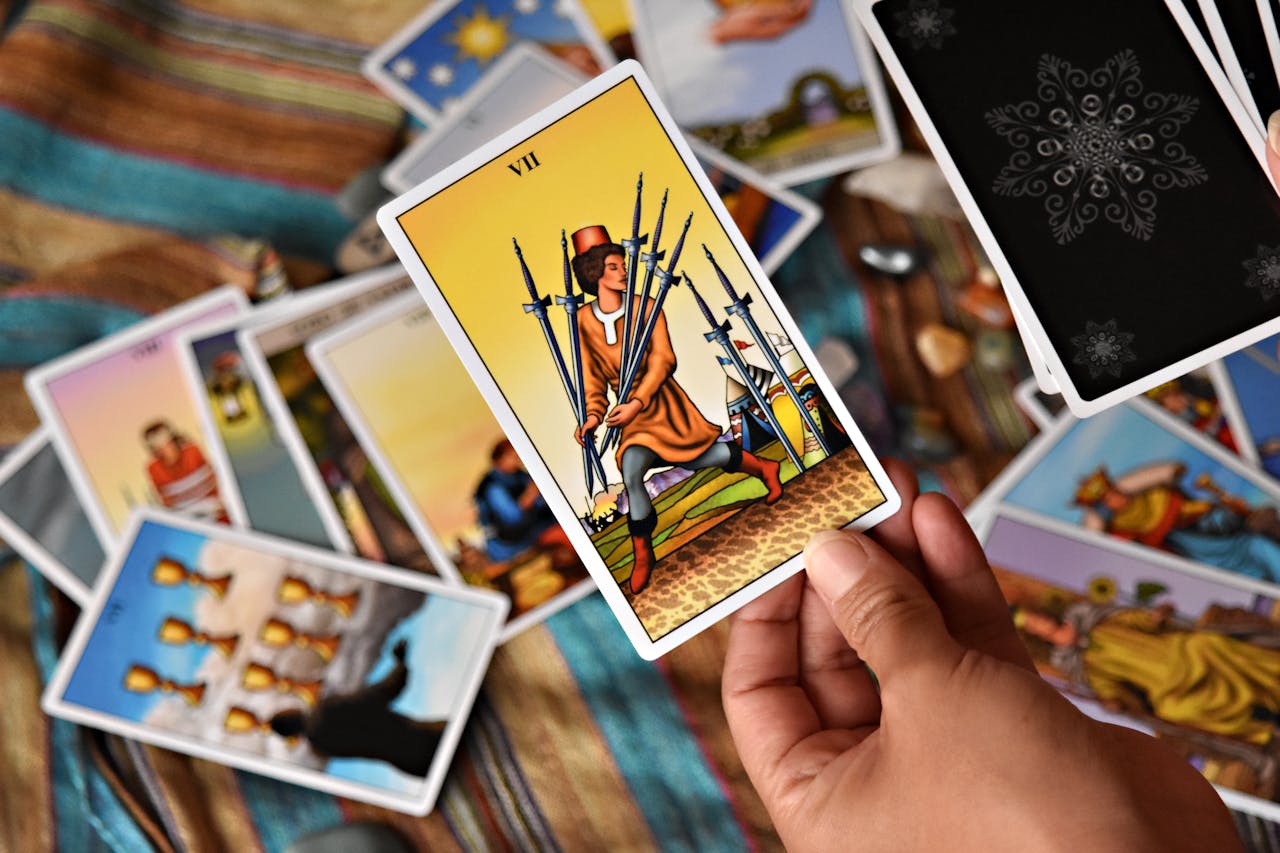
Best AI Tools for Tarot Card Reading in 2026 — Get Your Free AI Tarot Reading Instantly
Discover the best AI tarot card reader tools in 2026. Get instant, personalized tarot readings for love, career, and life guidance — free AI tarot apps reviewed and ranked.
Tarot card reading is one of the world's oldest and most enduring traditions of self-reflection and spiritual guidance. For over five centuries, people have turned to the 78 cards of the tarot deck to gain perspective on life's most important questions — about love, career, relationships, personal growth, purpose, and the choices that define the direction of a life.
For most of that history, getting a quality tarot reading meant finding a skilled reader, booking a session, and paying for their time and expertise. In 2026, artificial intelligence has changed that entirely. AI tarot card reader tools now provide instant, personalized, and remarkably detailed tarot readings — for free, at any time of day or night, from any device, without an appointment.
AI tarot tools use a combination of deep knowledge of tarot symbolism and tradition, natural language processing, and generative AI to create readings that go well beyond the generic card description text you find in beginner tarot books. The best ones understand card combinations and how cards modify each other's meanings within a spread, adapt their interpretation to the specific question or life area you are asking about, and deliver their readings in thoughtful, warm, and genuinely insightful language.
Whether you are a lifelong tarot enthusiast who wants daily card guidance at your fingertips, a curious newcomer who has always wanted to understand what tarot is actually about, someone going through a difficult life moment who wants a reflective framework for thinking it through, or a spiritual practitioner who uses tarot as one element of a broader mindfulness practice — this guide covers the best AI tarot card reader tools available in 2026.
Quick Answer: For the most personalized and detailed free AI tarot reading, Layla Tarot AI and Golden Thread Tarot lead the category. For the most beautiful mobile experience, Sanctuary is the standout. For the most conversational and flexible tarot reading, ChatGPT with a tarot prompt delivers extraordinary depth at zero cost. For daily guidance, Mystic Mondays and Astro AI are the most consistent daily tarot tools.
Table of Contents
- What Is AI Tarot Card Reading?
- How Does AI Tarot Reading Work?
- The 78 Cards — What the AI Reads
- Top 10 AI Tarot Card Reader Tools (Ranked)
- Side-by-Side Comparison Table
- Popular Tarot Spreads AI Tools Use
- How to Ask Better Questions for a Better AI Tarot Reading
- Tarot Reading vs. AI Tarot Reading — An Honest Comparison
- Frequently Asked Questions
- Final Thoughts
Our Top Picks at a Glance
- Best Overall — Layla Tarot AI
- Best Mobile Experience — Sanctuary
- Best for Daily Guidance — Mystic Mondays
- Best for Love Readings — Kasamba AI Tarot
- Best for Beginners — Biddy Tarot AI
- Best for Card Learning — Golden Thread Tarot
- Best Free Reading — Astro AI Tarot
- Best Conversational Reading — ChatGPT (Tarot Prompt)
- Best for Spreads — Labyrinthos
- Best for Spiritual Depth — Keen AI Tarot
What Is AI Tarot Card Reading?
AI tarot card reading is the application of artificial intelligence — specifically large language models, generative AI, and deep symbolic knowledge systems — to the ancient practice of tarot reading. Instead of a human tarot reader selecting and interpreting cards for you, an AI system simulates the card drawing process, identifies the cards drawn, and generates a personalized interpretation based on the cards' traditional meanings, their positions in the spread, and the specific question or life context you have provided.
The practice of tarot reading is built on a 78-card deck divided into two main sections — the Major Arcana (22 cards representing major life themes and archetypal forces) and the Minor Arcana (56 cards representing everyday situations and experiences across four suits). Each card carries rich symbolic meaning, and the relationship between cards within a spread — which cards appear together, in which positions, and whether they are upright or reversed — generates the nuanced interpretation that makes tarot a meaningful reflective tool.
AI tarot tools bring this entire symbolic system into a digital format — drawing cards randomly, placing them in the appropriate spread positions, and generating interpretations that draw on the full depth of tarot tradition.
It is worth being clear from the outset about what AI tarot reading is and is not. It is a powerful tool for self-reflection, perspective-taking, and contemplative guidance that uses the rich symbolic language of tarot — developed over centuries — to prompt meaningful insight about your life and choices. It is not a scientifically validated predictive system. The most meaningful tarot readings — whether with a human reader or an AI — are ones where you bring genuine openness and treat the cards as a mirror for reflection rather than a crystal ball for prediction.
With that understanding, AI tarot reading is a genuinely valuable, often surprisingly insightful, and increasingly popular way to engage with one of humanity's most enduring wisdom traditions.
How Does AI Tarot Reading Work?
Step 1 — Question or Intention Setting You begin by stating your question or the life area you want to explore. The best AI tarot tools guide you through this — helping you frame your question in a way that will produce the most meaningful reading. Open questions ("What do I need to know about my current relationship?") tend to produce richer readings than closed yes-or-no questions.
Step 2 — Spread Selection You choose the type of spread — how many cards will be drawn and what each position means. A single card draw gives a daily guidance message. A three-card spread examines past, present, and future (or situation, action, outcome). A Celtic Cross spread provides a ten-card deep dive into a complex situation. More cards means more depth and nuance in the reading.
Step 3 — Card Drawing The AI simulates the card drawing process — randomly selecting from the full 78-card deck, determining each card's position in the spread, and determining whether each card appears upright or reversed. Reversed cards carry modified or shadow meanings that add important nuance to readings.
Step 4 — Interpretation Generation The AI generates a personalized reading that interprets each card in the context of its spread position and your stated question. Good AI tarot tools don't just give you individual card meanings — they interpret how the cards relate to each other and weave them into a cohesive narrative that speaks to your specific situation.
Step 5 — Reflection and Follow-up The best AI tarot tools allow you to ask follow-up questions, explore specific cards in more depth, save your reading for future reference, or draw additional clarifying cards when the initial reading raises further questions.
The 78 Cards — What the AI Reads
Understanding the structure of the tarot deck helps you engage more meaningfully with your AI reading.
The Major Arcana — 22 Cards The Major Arcana represents the major archetypes, life themes, and spiritual forces that shape human experience. When Major Arcana cards appear in a reading, they signal significant themes, powerful forces at work, or important life lessons being presented. The 22 cards include The Fool (new beginnings, spontaneity, the leap of faith), The Magician (personal power, skill, manifestation), The High Priestess (intuition, mystery, inner knowing), The Empress (abundance, creativity, nurturing), The Emperor (structure, authority, stability), The Hierophant (tradition, spiritual guidance, convention), The Lovers (love, choice, union), The Chariot (determination, control, victory), Strength (courage, patience, inner strength), The Hermit (solitude, wisdom, introspection), Wheel of Fortune (cycles, fate, turning points), Justice (fairness, truth, cause and effect), The Hanged Man (surrender, new perspective, pause), Death (transformation, endings, transition), Temperance (balance, moderation, patience), The Devil (bondage, addiction, materialism), The Tower (sudden change, upheaval, revelation), The Star (hope, renewal, inspiration), The Moon (illusion, fear, the subconscious), The Sun (joy, success, vitality), Judgement (awakening, reflection, absolution), and The World (completion, integration, achievement).
The Minor Arcana — 56 Cards The Minor Arcana represents the everyday situations, challenges, emotions, and experiences of ordinary life. It is divided into four suits, each associated with an element and a life domain. The Suit of Wands (Fire — passion, creativity, career, and ambition), The Suit of Cups (Water — emotions, relationships, intuition, and the inner life), The Suit of Swords (Air — thought, communication, conflict, and decision-making), and The Suit of Pentacles (Earth — material matters, money, work, health, and the physical world). Each suit contains 14 cards: Ace through Ten and four Court Cards — Page, Knight, Queen, and King.
Upright and Reversed Cards Every card can appear upright or reversed (upside down), and reversed cards carry modified meanings — often representing blocked, internalized, or shadow aspects of the card's core energy. A reversed Strength card, for example, might suggest that the courage and inner strength the card represents are present but not yet fully accessible, or that self-doubt is undermining natural capability.
Top 10 AI Tarot Card Reader Tools in 2026
#1 — Layla Tarot AI (Best Overall)
Tagline: The most intelligent and personalized AI tarot reader available — deep, warm, and genuinely insightful
Pricing: Free readings available · Premium subscription for unlimited access
Layla Tarot AI is the standout platform in the AI tarot category — offering the most sophisticated combination of genuine tarot knowledge, personalized reading generation, and conversational depth of any tool currently available. Named after a fictional tarot reader persona, Layla feels like a genuinely wise and warm guide rather than a database querying system.
The experience begins with Layla asking about what is on your mind — not a rigid question input field but a conversational opening that encourages you to share as much or as little context as you want. The more context you provide — the specific situation, the feelings involved, the choice you are facing — the more specifically tailored and resonant the reading becomes. Layla remembers context within the session and builds on it as the reading develops.
Card selection is animated and beautifully presented — you are invited to focus your intention and select from a spread of face-down cards, creating a sense of ritual participation that makes the reading feel meaningful rather than mechanical. The interpretations Layla generates for each card are rich with symbolic detail, draw on the specific position of the card in the spread, and consistently connect back to the question or situation you shared. The language is warm, thoughtful, and free of the generic boilerplate that makes lesser AI tarot tools feel like encyclopedia lookups.
The follow-up conversation feature is where Layla truly excels — you can ask about any card in your reading, request clarification, draw an additional clarifying card, or ask specific follow-up questions that explore the reading's themes in more depth. This conversational flexibility transforms the reading from a static text output into a genuine dialogue.
Pros:
- Most personalized and contextually aware reading in the category
- Genuinely conversational — follow-up questions explored in depth
- Beautiful card selection ritual with animated presentation
- Warm, thoughtful reading language — never generic
- Good free tier with meaningful readings
- Remembers session context and builds on it throughout
- Covers all major spread types including Celtic Cross
Cons:
- Unlimited readings require premium subscription
- Session context does not persist between separate sessions on free tier
- Occasional over-explanation on very simple spreads
- Not suitable for users who want pure card meanings without narrative
Best for: Anyone who wants the most immersive, personalized, and conversationally rich AI tarot reading experience available
#2 — Sanctuary (Best Mobile Experience)
Tagline: The most beautifully designed spiritual AI app — tarot, astrology, and human design in one immersive experience
Pricing: Free tarot readings · Sanctuary Pro subscription for full access
Sanctuary is primarily known as a comprehensive astrology app, but its AI tarot reading feature has become one of the most used and most appreciated in the category — largely because the experience is simply more beautiful, more immersive, and more thoughtfully designed than any competing tool.
The tarot reading flow in Sanctuary is a genuine sensory experience. The interface uses deep, rich colors, elegant card artwork based on traditional tarot iconography, gentle ambient sound design, and smooth animations that make each reading feel like a meaningful ritual rather than a software interaction. The reading begins with an intention-setting prompt, guides you through a beautifully animated card draw, and presents the interpretation with stunning typography and visual design that makes the reading a pleasure to sit with.
The readings themselves are warm and psychologically thoughtful — Sanctuary explicitly frames tarot as a self-reflection and personal growth tool rather than fortune-telling, which gives its reading narratives a grounded, non-sensationalist tone that many users find more trustworthy and ultimately more useful. The integration with your astrological birth chart — if you have set it up in the app — allows Sanctuary to contextualize your tarot reading within your broader astrological profile, creating layered personal insight that neither tool alone provides.
Pros:
- Best visual design and user experience in the category
- Thoughtful self-reflection framing rather than fortune-telling
- Integration with astrological birth chart for layered readings
- Beautiful card artwork and ritual-like presentation
- Warm and psychologically grounded reading tone
- Daily tarot card feature for regular practice
- Large and engaged user community
Cons:
- Full app requires pro subscription for unlimited access
- Tarot is one feature among many — not the primary platform focus
- Reading depth slightly less than dedicated tarot-only tools
- Upsell prompts can interrupt the reading experience
Best for: Users who want the most beautiful and immersive mobile tarot experience as part of a broader astrology and wellness practice
#3 — Mystic Mondays (Best for Daily Guidance)
Tagline: Daily tarot guidance with the most distinctive and vibrant modern card artwork — make tarot a daily practice
Pricing: Free daily card · App subscription for full reading access
Mystic Mondays began as a popular tarot card deck designed by Grace Duong — known for its bold, colorful, geometric art style that modernizes traditional tarot imagery into something vivid and contemporary. The AI app built around the deck brings that distinctive visual energy into a digital daily guidance tool that has built an enthusiastic following among younger tarot practitioners.
The daily card feature is the heart of the Mystic Mondays app — each morning you receive a daily tarot card draw with an interpretation written in the app's characteristically warm and direct voice. The AI personalizes the daily message based on your profile and any intention or focus area you have set, making each day's card feel specifically relevant rather than generic.
Beyond the daily card, Mystic Mondays offers full spread readings using the app's AI interpretation engine — three-card spreads, five-card spreads, and the Celtic Cross — each interpreted with the same bold, accessible, non-mystifying voice that has made the brand popular with tarot newcomers who find traditional tarot language obscure and off-putting.
The artwork alone makes the app worth downloading — the Mystic Mondays card designs are genuinely beautiful and unlike any traditional tarot deck, making the daily card experience a visual delight as well as a reflective one.
Pros:
- Best visual card artwork in the category — bold, modern, distinctive
- Daily card feature builds a sustainable tarot practice habit
- Accessible, non-mystifying reading language for beginners
- AI personalization of daily guidance messages
- Full spread reading capability
- Strong brand community and social sharing features
- Excellent for making tarot a regular daily ritual
Cons:
- Full reading access requires subscription
- Artistic style is strong personal preference — not everyone's taste
- Reading depth less than specialized AI reading platforms
- Less suitable for traditional tarot practitioners who prefer classic imagery
Best for: Tarot beginners and practitioners who want to build a daily tarot practice with beautiful modern card artwork and accessible reading language
#4 — Kasamba AI Tarot (Best for Love Readings)
Tagline: AI tarot readings with a deep focus on love, relationships, and emotional guidance
Pricing: Free introductory reading · Credits for extended readings
Kasamba is primarily a platform connecting users with professional psychic and spiritual advisors, and its AI tarot reading feature reflects the platform's heritage — the readings are emotionally warm, relationship-focused, and particularly attuned to the questions that most people bring to tarot: love, compatibility, romantic prospects, and emotional healing.
The AI tarot reading on Kasamba opens by inviting you to share what is on your heart — the specific relationship situation, the person involved, the feelings you are navigating — and builds the reading around that emotional context with a sensitivity and warmth that more generalist tarot tools often miss. The heart line of the reading — its focus on the emotional dimension of whatever situation you bring — is consistently strong.
For the love and relationship spread specifically, Kasamba's AI produces some of the most nuanced and emotionally intelligent readings in the category — interpreting the Lovers, the Two of Cups, the Three of Swords, and other relationship-relevant cards with an empathy and specificity that users navigating real romantic challenges find genuinely supportive.
The platform also allows escalation to a human tarot reader or psychic for follow-up — which some users find reassuring when their question feels too complex or personal for an AI reading alone.
Pros:
- Most emotionally attuned relationship and love reading in the category
- Opens with empathetic emotional context gathering
- Specific question input shapes reading around your situation
- Nuanced interpretation of love and relationship cards
- Escalation to human readers available for follow-up
- Warm, supportive reading tone
Cons:
- Extended readings require credits — can become expensive
- Persistent upsells toward paid human readers
- Less comprehensive on career and life path themes
- Platform primarily designed to convert to paid human consultations
Best for: Users who specifically want tarot insight about love, romantic relationships, compatibility, and emotional healing
#5 — Biddy Tarot AI (Best for Beginners)
Tagline: Learn tarot and get readings at the same time — the world's most trusted tarot education platform goes AI
Pricing: Free content and basic readings · Biddy Tarot membership for full AI features
Biddy Tarot is the world's largest tarot education platform — with millions of students having learned tarot through founder Brigit Esselmont's courses, books, and website over the past two decades. The addition of AI reading capabilities to the Biddy Tarot ecosystem creates something uniquely valuable: a tarot reader that teaches you as it reads for you.
Every card interpretation in a Biddy Tarot AI reading comes with a dual layer — the interpretation of what the card means in the context of your reading, and an educational layer explaining what the card traditionally represents, which symbols are significant, and how to remember and recognize the card's energy in future readings. For someone who wants to learn tarot while using it rather than just receiving readings passively, this educational approach is genuinely superior to any other tool in the category.
The reading quality itself is excellent — Biddy Tarot's deep content library of card meanings, combinations, and spread interpretations has provided high-quality training data for its AI, making the readings substantively knowledgeable in a way that reflects two decades of serious tarot scholarship. The language is clear, accessible, and free of the mystifying jargon that makes traditional tarot writing confusing for beginners.
Pros:
- Best tarot learning experience integrated into readings
- Educational layer explains card symbolism alongside interpretation
- Backed by the world's largest tarot education library
- Excellent reading quality grounded in deep tarot scholarship
- Accessible, jargon-free language ideal for beginners
- Comprehensive card meaning database
- Trusted brand with massive established tarot community
Cons:
- Full AI features require Biddy Tarot membership
- Educational focus may feel slow for experienced practitioners wanting quick readings
- Less visually immersive than Sanctuary or Mystic Mondays
- Membership cost higher than standalone tarot apps
Best for: Tarot beginners and learners who want to genuinely understand the tarot system while receiving readings, not just consume readings passively
#6 — Golden Thread Tarot (Best for Card Learning)
Tagline: The minimalist tarot app that makes learning every card's meaning effortless and beautiful
Pricing: Free (substantial) · Premium for full reading features
Golden Thread Tarot is built around a gorgeous minimalist card deck — thin gold line illustrations on black backgrounds that are both striking and symbolically clear. The app's primary strength is card education alongside reading capability — it is designed to help users build genuine tarot knowledge rather than simply deliver readings they passively consume.
The card library within Golden Thread is exceptional — each of the 78 cards has a detailed dedicated page covering keywords, traditional meaning, reversed meaning, imagery symbolism explanation, and guided questions to reflect on when the card appears. The AI reading integration draws on this deep card knowledge to produce interpretations that feel genuinely grounded in tarot scholarship rather than surface-level.
The journaling feature — which prompts you to write your own reflections on each reading and each card — transforms the reading experience into an active practice of building your own relationship with the tarot. Over time, your Golden Thread journal becomes a personal record of your tarot journey that makes future readings progressively more meaningful as you deepen your card knowledge and personal associations.
Pros:
- Best card education feature in the category
- Beautiful minimalist gold line card artwork
- Comprehensive 78-card library with deep per-card content
- Journaling feature builds personal relationship with the cards
- Reading interpretations grounded in genuine tarot scholarship
- Generous free tier covering core features
- Excellent for users who want to own their tarot knowledge
Cons:
- Full reading features require premium
- Less conversational than Layla Tarot AI
- Minimalist aesthetic is strong personal preference — not universal
- Less emotionally warm in reading tone than Sanctuary or Kasamba
Best for: Users who want to genuinely learn the tarot system and build real card knowledge while using an AI tarot reading tool
#7 — Astro AI Tarot (Best Free Reading)
Tagline: Completely free AI tarot readings with daily guidance, spread options, and astrological context
Pricing: Free daily and spread readings · Premium for extended features
Astro AI Tarot offers the most generous completely free AI tarot reading experience available in 2026 — providing full spread readings, daily card guidance, and astrological context without requiring any payment or subscription for the core reading experience. For users who want meaningful, detailed tarot readings at zero cost, Astro AI Tarot delivers more free value than any competing platform.
The free reading covers three-card spreads, five-card spreads, and daily single card draws with full AI-generated interpretations that go well beyond brief card descriptions. The integration of basic astrological context — connecting the current planetary positions with the cards drawn — adds a layer of cosmic timing perspective that many tarot practitioners find valuable and that most free tools completely omit.
Reading quality is solid throughout — interpretations are thoughtful, contextually aware, and written in accessible language that serves both beginners and experienced practitioners. The spread variety available on the free tier is more generous than most paid tools, making Astro AI Tarot an exceptional value for regular tarot users.
Pros:
- Most generous free tarot reading tier in the category
- Full spread readings free without subscription
- Daily card guidance included at no cost
- Astrological timing context adds meaningful depth
- Accessible language for all experience levels
- Good spread variety on free tier
- No account required for basic readings
Cons:
- Extended features and personalization require premium
- Visual design less polished than Sanctuary or Mystic Mondays
- Astrological integration is basic compared to dedicated astrology apps
- Reading depth not as great as Layla Tarot AI on complex questions
Best for: Users who want comprehensive, genuinely detailed tarot readings at zero cost on a regular basis
#8 — ChatGPT with Tarot Prompt (Most Flexible Free Reading)
Tagline: The world's most capable AI delivers extraordinary tarot readings with the right prompt — fully free and infinitely flexible
Pricing: Free (ChatGPT free tier)
This entry — like the ChatGPT palm reading entry in our palm reading guide — is a workflow rather than a dedicated app, but it deserves prominent placement because of how extraordinary the results are when done well. ChatGPT, prompted correctly for tarot reading, delivers readings of greater depth, nuance, and specificity than most dedicated tarot apps — and it does so for free, with complete conversational flexibility.
The key is the prompt. A generic prompt produces a generic reading. A well-crafted prompt that tells ChatGPT your question, the spread you want, your preferred reading style, and the level of depth you want produces a reading of remarkable quality — drawing on the full depth of tarot symbolism, traditional card meanings, reversal interpretations, card combination dynamics, and contextual wisdom that ChatGPT has absorbed from extensive tarot literature.
The conversational nature of ChatGPT means you can ask follow-up questions about any card, request that a specific card be explored in more depth, ask for a clarifying card to be drawn, have the reading reframed from a different perspective, or ask ChatGPT to connect the reading's themes to practical action steps. No dedicated tarot app offers this level of conversational flexibility.
Prompts that produce exceptional ChatGPT tarot readings:
Single card daily guidance: "You are an experienced and insightful tarot reader with deep knowledge of the Rider-Waite-Smith tradition. Please draw one card from the full 78-card deck for me today. Tell me which card was drawn — upright or reversed — and give me a rich, thoughtful interpretation of its message for today. My current focus is [your situation or question]."
Three card spread: "Please give me a three card tarot reading. The positions are: 1) The situation as it is now, 2) The hidden factor or what I need to see, 3) The likely outcome if I continue on my current path. My question is: [your question]. Draw three cards from the full deck including reversals and interpret each card in its position, then synthesize the three cards into an overall message."
Celtic Cross: "Please perform a ten card Celtic Cross tarot spread for me. My question is: [your question]. Draw ten cards from the full 78-card deck including reversals, place them in the ten Celtic Cross positions, interpret each card in its position, and then give me an overall synthesis reading that connects all ten cards into a coherent narrative response to my question."
Pros:
- Completely free on ChatGPT free tier
- Deepest and most nuanced readings possible with a good prompt
- Fully conversational — unlimited follow-up questions
- Complete flexibility — any spread, any tradition, any focus area
- Can simulate different reading styles and tarot traditions
- No visual elements or app required
Cons:
- Requires a well-crafted prompt to get quality results
- No visual card presentation or artwork
- No random card drawing mechanic — the ritual element is absent
- Results vary significantly with prompt quality
- Not as beginner-friendly as dedicated tarot apps
Best for: Experienced tarot enthusiasts and curious intellectuals who want the deepest and most nuanced AI tarot reading possible through conversational interaction
#9 — Labyrinthos (Best for Tarot Spreads)
Tagline: The most comprehensive spread library and tarot learning system — beautifully illustrated and deeply educational
Pricing: Free (very generous) · Premium for full features
Labyrinthos is a tarot and oracle app built around a proprietary deck called the Arcana — a beautifully illustrated deck that blends traditional tarot symbolism with a contemporary artistic sensibility. The app has built one of the most enthusiastic tarot learning communities in the category, driven by its exceptional educational content and the quality of its AI reading engine.
The spread library in Labyrinthos is the most comprehensive in the category — covering not just the standard three-card and Celtic Cross spreads but dozens of specialized spreads for specific situations and questions: a new moon manifestation spread, a relationship compatibility spread, a shadow work spread, a year ahead spread, a decision-making spread, a self-care spread, and many more. For experienced tarot practitioners who work with specific spreads for specific purposes, this library is genuinely valuable.
The AI interpretation quality for each spread is strong — the readings demonstrate real understanding of how different spread positions interact and modify each other, producing interpretations that feel like they come from a reader who genuinely understands the spread structure rather than interpreting each card in isolation.
Pros:
- Most comprehensive spread library in the category
- Beautiful proprietary Arcana deck artwork
- Exceptional tarot education content and card library
- AI interprets card combinations and spread dynamics well
- Very generous free tier
- Quizzes and gamified learning features for card memorization
- Strong and engaged community
Cons:
- Full AI reading features require premium
- Proprietary deck may not appeal to Rider-Waite tradition purists
- App can feel content-heavy — steep learning curve for pure reading use
- Less emotionally warm tone than Sanctuary or Kasamba
Best for: Tarot enthusiasts who work with specific spreads for specific purposes and want the most comprehensive spread library available
#10 — Keen AI Tarot (Best for Spiritual Depth)
Tagline: AI tarot readings with genuine spiritual depth — for seekers who want more than surface interpretation
Pricing: Free introductory reading · Credits for extended readings
Keen is a longstanding platform in the spiritual guidance space — connecting users with psychic readers, astrologers, and tarot specialists for over two decades. Its AI tarot feature brings the spiritual seriousness and depth of professional tarot practice into an accessible AI format, producing readings that carry more genuine spiritual weight than the lighter, more casual tone of many consumer tarot apps.
The Keen AI tarot readings draw on classical tarot tradition in a way that takes the symbolic system seriously — exploring the full archetypal significance of Major Arcana cards, understanding the elemental energies of the Minor Arcana suits, and interpreting reversals with the nuanced understanding of shadow work and blocked energy that serious tarot practitioners expect. For seekers who approach tarot as a genuine spiritual practice rather than casual entertainment, Keen's AI produces readings that meet that level of engagement.
The platform also allows seamless escalation to professional human tarot readers for deeper consultation when an AI reading raises questions that the user wants to explore at greater depth — a feature that positions Keen as a bridge between accessible AI readings and professional tarot consultation rather than a replacement for the latter.
Pros:
- Most spiritually serious and depth-oriented reading in the category
- Classical tarot tradition treated with genuine respect
- Strong reversal card interpretation
- Excellent Major Arcana archetypal analysis
- Escalation to professional human readers available
- Good for practitioners who take tarot seriously as a spiritual tool
Cons:
- Extended readings require credits — cost adds up with regular use
- Less accessible for absolute beginners than Biddy Tarot or Mystic Mondays
- Persistent upsell toward paid human reader consultations
- Visual design functional but not as beautiful as Sanctuary
Best for: Serious tarot practitioners and spiritual seekers who want readings that treat tarot as a genuine spiritual and symbolic system rather than entertainment
Side-by-Side Comparison Table
| Tool | Best For | Free Reading | Spread Options | Daily Card | Love Focus | Learning Layer | Conversational |
|---|---|---|---|---|---|---|---|
| Layla Tarot AI | Best overall | ✅ | ✅ Multiple | ✅ | ✅ | ✅ | ✅ Best |
| Sanctuary | Mobile experience | ✅ | ✅ Good | ✅ | ✅ | ✅ | ✅ |
| Mystic Mondays | Daily guidance | ✅ Daily | ✅ Good | ✅ Best | ✅ | ✅ Basic | ❌ |
| Kasamba AI | Love readings | ✅ Intro | ✅ Good | ❌ | ✅ Best | ❌ | ✅ |
| Biddy Tarot AI | Beginners | ✅ Limited | ✅ Good | ✅ | ✅ | ✅ Best | ✅ |
| Golden Thread | Card learning | ✅ Good | ✅ Basic | ✅ | ✅ | ✅ Excellent | ❌ |
| Astro AI Tarot | Free readings | ✅ Full | ✅ Good | ✅ | ✅ | ✅ Basic | ❌ |
| ChatGPT | Flexible depth | ✅ Free | ✅ Any | ✅ | ✅ | ✅ | ✅ Best |
| Labyrinthos | Spread variety | ✅ Good | ✅ Best | ✅ | ✅ | ✅ Excellent | ❌ |
| Keen AI Tarot | Spiritual depth | ✅ Intro | ✅ Good | ❌ | ✅ | ✅ | ✅ |
Popular Tarot Spreads AI Tools Use
Understanding the most common spreads helps you choose the right one for your question and get the most from your AI reading.
Single Card Draw The simplest and most flexible spread. One card is drawn and interpreted as a complete message. Ideal for daily guidance, a quick perspective on a simple question, or when you want a focused single insight rather than a complex multi-card narrative. Most AI tarot tools offer this as a daily card feature.
Three Card Spread The most versatile multi-card spread — three cards drawn in sequence, each representing a different aspect of your situation. Common three-card configurations include Past / Present / Future (shows the timeline of a situation), Situation / Action / Outcome (shows where you are, what to do, and where it leads), Mind / Body / Spirit (shows the three dimensions of your current state), and What to Embrace / What to Release / What to Focus On (a growth-oriented spread for personal development questions).
Five Card Spread Adds complexity and nuance to the three-card structure. A common five-card configuration is the Cross Spread — a central card representing the situation, flanked by cards representing the challenge, the foundation, the recent past, and the near future.
Celtic Cross — Ten Cards The most comprehensive and widely used spread in tarot practice. Ten cards are laid in a specific pattern, each position covering a distinct aspect of the situation: the current moment, the crossing challenge, the foundation, the recent past, the possible future, the near future, the querent's position, external influences, hopes and fears, and the final outcome. Celtic Cross readings take more time but provide extraordinary depth for complex life questions.
Relationship Spread A specialized spread examining a relationship from multiple angles — each person's feelings, the relationship's current energy, the challenges, the strengths, and the direction the relationship is heading. Ideal for questions about romantic partnerships, friendships, or professional relationships.
Year Ahead Spread Twelve cards, one for each month of the coming year, providing a card-based overview of the themes and energies that each month may bring. Popular at New Year or birthdays as an annual planning and reflection tool.
How to Ask Better Questions for a Better AI Tarot Reading
The quality of your AI tarot reading is significantly shaped by the quality of your question and the context you provide. Here is how to get the most meaningful reading possible:
Use open questions rather than closed ones. "Will my relationship work out?" (closed) produces a less useful reading than "What do I need to understand about my relationship right now?" (open). Open questions invite the cards to show you what you need to see rather than forcing a yes or no answer onto a nuanced situation.
Be specific about the situation without being leading. "I am facing a significant career decision and feeling uncertain about which path aligns with my deeper values" gives the AI tarot useful context without steering toward a predetermined answer. The more real and honest context you provide, the more specific and resonant the reading becomes.
Focus on what you can influence. Tarot readings are most useful when they focus on your choices, attitudes, growth, and understanding rather than what other people will or won't do. "What do I need to do to improve my relationship?" produces more actionable insight than "What is my partner thinking?"
State your emotional state honestly. If you are anxious, heartbroken, excited, or confused — saying so gives the AI context that shapes how it frames the reading. A reading for someone in acute grief will and should be framed differently from a reading for someone making a calm, considered decision.
Ask about one thing at a time. Tarot readings that try to cover everything — career, relationship, health, and family all at once — tend to produce fragmented, less useful interpretations. Choose the most pressing question for each reading and give it the full focus of the cards.
Tarot Reading vs. AI Tarot Reading — An Honest Comparison
What AI tarot reading does well:
AI tarot is available instantly, at any hour, at zero or minimal cost. It is consistent — it applies the same depth of symbolic knowledge every time without fatigue, mood variation, or personal bias. It is non-judgmental — you can ask about any situation, any relationship, any fear, without social awkwardness. For users who want to explore tarot regularly as a personal practice, AI reading removes every practical barrier to doing so.
The best AI tarot tools — particularly Layla Tarot AI and ChatGPT with a good prompt — also produce readings of genuine intellectual and symbolic depth. They draw on the full complexity of tarot tradition in ways that many human readers who have not studied deeply simply do not.
What a skilled human tarot reader provides that AI cannot:
A gifted human tarot reader reads the whole person in front of them — not just the cards. They notice the energy you bring to the session, the questions behind your question, the things you are reluctant to say directly, and the intuitive connections between the cards and your specific lived experience that no symbolic database can replicate. The best human tarot readings are intimate, deeply intuitive conversations that go far beyond card interpretation into genuine spiritual connection and guidance.
The honest framing:
AI tarot reading is best understood as a powerful self-reflection and contemplative practice tool that uses the rich symbolic language of tarot to help you see your situation from new angles, access your own wisdom, and make more conscious choices. Approached with openness and used regularly, it is genuinely valuable. Approached as a literal prediction system, it will disappoint. The magic of tarot — whether human or AI — has always been in what the cards reveal about the questioner rather than about the future.
Frequently Asked Questions
Is AI tarot reading accurate? Accuracy in tarot reading is a complicated concept. AI tarot tools are highly accurate in their knowledge and application of tarot symbolism — the card meanings, the significance of reversals, and the dynamics of card combinations are all applied with genuine knowledge. Whether tarot reading predicts future events is a question that science does not support with evidence — and the most thoughtful tarot practitioners don't make that claim. What AI tarot reading is consistently good at is generating symbolic frameworks for self-reflection that many users find surprisingly resonant with their actual situation. Most users report that good AI tarot readings feel meaningful and relevant even when they approach them with healthy skepticism.
Which hand should I use for tarot? Unlike palmistry, tarot does not involve your hands — you draw cards. However, some tarot practitioners recommend focusing your dominant hand over the cards as you make your selection, believing that the hand you use for active engagement with the world carries your conscious intention most strongly. Most AI tarot tools simply simulate the card draw algorithmically — the intention you set in your question is the equivalent of the physical card selection ritual.
Can I do a tarot reading for someone else using AI tools? Yes — most AI tarot tools allow you to specify that the reading is for a third party. You describe the situation of the person you are reading for and ask the AI to draw cards on their behalf. The ethical consideration is consent — traditional tarot practitioners generally hold that reading for someone without their knowledge or consent raises questions about respecting their energetic privacy. If you are doing an AI tarot reading for someone you care about, letting them know and involving them in the question-framing produces better readings and respects their autonomy.
How many tarot cards are in a full deck? A full tarot deck contains 78 cards — 22 Major Arcana cards and 56 Minor Arcana cards (divided into four suits of 14 cards each). Some oracle card decks used in similar reading practices have different numbers of cards and their own unique symbolism systems. Tarot-specific AI tools are trained on the standard 78-card system.
What is the difference between tarot and oracle cards? Tarot is a structured system of 78 cards with specific, codified meanings that have developed over centuries of tradition. Oracle cards are a broader, more flexible category — decks can have any number of cards with any themes or symbolism the creator chooses, without adherence to a traditional structure. AI tarot tools specifically work with the tarot's 78-card system. Some apps also offer oracle card readings alongside tarot — Sanctuary and Labyrinthos both include oracle card features.
Is it bad luck to read your own tarot? No — reading your own tarot is an ancient and widely practiced tradition. Many professional tarot readers read their own cards regularly as a personal practice tool. The main challenge of self-reading is objectivity — it can be harder to receive a message clearly when you are both the reader and the subject. AI tarot tools are particularly well-suited to self-reading because the AI provides the external perspective that is harder to access when you are reading for yourself.
How often should I get an AI tarot reading? There is no fixed rule — it depends entirely on how you use tarot and what serves you. Many practitioners do a daily single card draw as a morning reflection ritual. Others do a full spread reading weekly, monthly, or only when facing a significant decision or challenge. Doing multiple full readings on the same question in a short period tends to produce less useful results — the cards have given you a message, and the most productive next step is to sit with it rather than keep drawing until you hear something different.
Do the major arcana cards mean the same thing in AI readings as in traditional readings? Yes — the best AI tarot tools draw directly on the classical tarot tradition for their card meanings, applying the established symbolism of cards like The Tower (sudden upheaval and revelation), The Star (hope and renewal after difficulty), and Death (transformation and necessary endings rather than literal death) consistently with how these cards have been understood in tarot tradition for centuries.
Final Thoughts
AI tarot card reading tools have done something genuinely remarkable — they have taken one of humanity's most enduring and symbolically rich wisdom traditions and made it instantly accessible to anyone with a smartphone and a question. The barrier to engaging with tarot's 500 years of accumulated symbolic insight is now essentially zero.
The best AI tarot tools of 2026 are not gimmicks or novelties. They are thoughtfully built, symbolically sophisticated, and often surprisingly insightful tools that millions of people use as regular parts of their reflection, decision-making, and spiritual practice.
Layla Tarot AI delivers the most personalized, conversational, and depth-oriented reading experience. Sanctuary is the most beautiful and immersive. Biddy Tarot AI is the best path for beginners who want to genuinely learn tarot while using it. Golden Thread Tarot and Labyrinthos serve serious practitioners who want to deepen their card knowledge alongside their reading practice. Astro AI Tarot offers the most generous completely free reading tier. And ChatGPT — with a well-crafted prompt — remains the most flexible and deeply knowledgeable reading experience available at zero cost.
Whatever draws you to tarot — curiosity, comfort in difficult times, a desire for self-understanding, a long-standing spiritual practice, or simply a sense that there might be wisdom in the cards — the tools to explore it have never been more accessible, more sophisticated, or more free.
The cards are drawn. The reading begins. What you do with the insight is always, and only, up to you.